
Summer in Malta means sunshine, longer days and more opportunities to spend time outdoors with your dog. However, when temperatures approach 40°C or more, the heat can quickly become uncomfortable and potentially dangerous for pets.
Dogs cannot regulate their body temperature as efficiently as humans. They depend heavily on panting to release heat, which means strenuous exercise, hot pavements, poor ventilation and a lack of water can place them at risk of overheating.
Knowing how to keep your dog cool in summer is therefore an important part of responsible pet care. From providing fresh water to choosing the right walking accessories, these six practical tips can help keep your dog safer and more comfortable throughout Malta's hottest months.
1. Keep fresh, cool water available throughout the day
Hydration is one of the most important parts of dog summer safety.
Your dog should always have access to clean drinking water, even when they are spending most of the day indoors. During particularly hot weather, consider placing more than one water bowl around your home so that water is always close by.
Change the water regularly and keep the bowls away from direct sunlight. When going outside, take a portable water bottle and collapsible bowl with you — even when you are only planning a short walk.
You can also encourage hydration by:
- Adding a small amount of water to their regular food
- Offering dog-safe frozen treats
- Placing water bowls in several cool areas
- Taking regular water breaks during outings
Do not wait until your dog appears extremely thirsty. Keeping them consistently hydrated is much safer than trying to replace fluids after they have already become overheated.
2. Walk your dog during the coolest parts of the day
During Malta's summer months, the middle of the day is usually far too hot for a normal dog walk.
Plan outdoor exercise for the early morning or later in the evening, when both the air and ground are cooler. Even after the sun begins setting, pavements may remain hot, so always check the conditions before leaving.
Cornell University's veterinary guidance recommends limiting activity to cooler times and notes that the hottest part of the day can occur during the late afternoon rather than exactly at midday.
Keep summer walks shorter and slower than usual. Allow your dog to stop in shaded areas and avoid running, long games of fetch or other intense exercise.
On exceptionally hot days, skipping the walk may be the safest option. You can replace it with indoor activities such as:
- Treat-finding games
- Puzzle toys
- Short training sessions
- Lick mats
- Gentle indoor play
Mental stimulation can keep your dog occupied without increasing their body temperature through strenuous exercise.
3. Protect your dog's paws from hot pavement
Air temperature is only part of the danger. Asphalt, concrete, paving stones and artificial grass can become extremely hot after sitting in direct sunlight.
Before walking your dog, carefully touch the surface with the back of your hand. When the ground feels uncomfortably hot to you, avoid allowing your dog to walk on it.
Whenever possible, choose:
- Shaded routes
- Natural grass
- Cooler walking times
- Shorter outdoor journeys
Can dog shoes protect paws from hot pavement?
Properly fitted dog shoes for hot pavement can provide an additional layer of protection during necessary outdoor trips. They may be particularly helpful when your dog must briefly cross a hot car park, pavement or exposed area.
However, dog shoes should not be used as a reason to take long walks during peak heat. Your dog can still overheat even when their paws are protected.
Choose lightweight shoes with secure, adjustable fastenings and suitable grip. Make sure they are not too tight, and introduce them gradually indoors before using them outside. The American Kennel Club recommends allowing dogs time to adjust and selecting footwear that fits securely while leaving the paws room to breathe.
After every walk, remove the shoes and check the paws for:
- Redness
- Blisters
- Tender areas
- Irritation
- Small cuts or trapped debris
4. Choose a lightweight, properly fitted dog harness
A comfortable harness is useful for keeping your dog secure and under control during shorter summer walks.
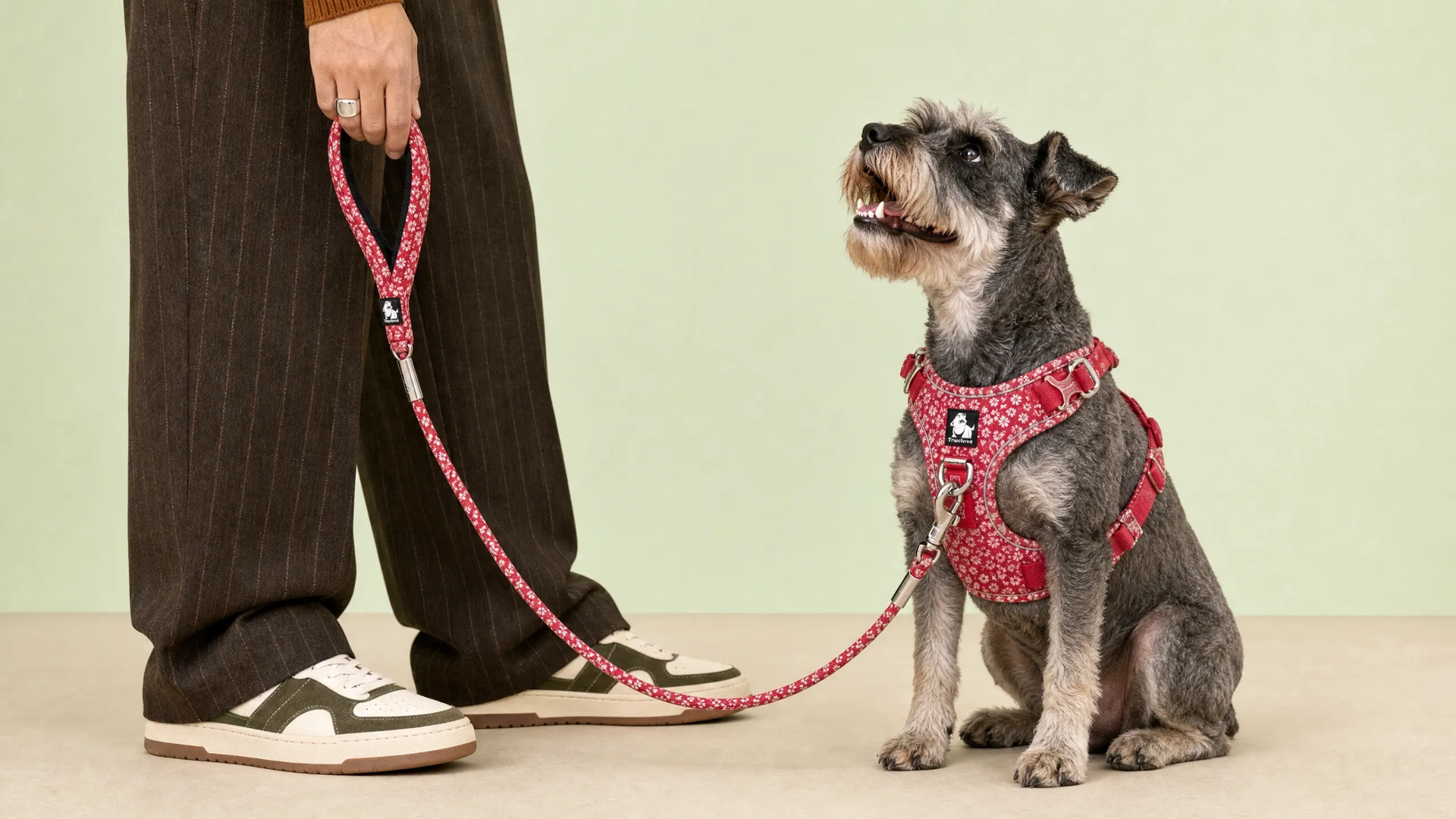
Choose a lightweight dog harness that fits properly without rubbing, restricting movement or placing unnecessary material around the body. A harness should be secure enough that your dog cannot escape, but it should not feel excessively tight.
Check that you can comfortably place approximately two fingers between the harness and your dog's body. Pay particular attention to the chest, underarms and neck area, where rubbing is more likely to occur.
A harness does not protect a dog from heatstroke and does not make dangerously hot walking conditions safe. Its purpose is to provide comfortable control while you keep the walk short, slow and properly timed.
Remove the harness once you return home so your dog can rest freely and cool down. You should also inspect it regularly for damaged straps, loose buckles or rough areas that could irritate the skin.
For evening walks, a harness with reflective details can also help make your dog more visible in lower light.
5. Create a cool and comfortable place to rest
During extreme summer heat, dogs should spend most of the day in the coolest part of the home.
Close blinds or curtains where strong sunlight enters, keep air circulating and use air conditioning or fans when available. Your dog may prefer resting on tile flooring rather than in a thick bed, so allow them to choose the most comfortable surface.
You can also provide:
- A cooling mat
- A shaded resting area
- A shallow paddling pool under supervision
- Cool flooring
- Good airflow
- Access to several water bowls
Never leave your dog unattended inside a parked car, enclosed balcony, poorly ventilated room, shed or garage. Partial shade and open windows do not make a vehicle safe during warm weather.
When cooling a warm dog, you can use cool tap water on the body while providing airflow. Avoid wrapping an overheated dog in wet towels, as towels placed over the body can trap heat.
6. Learn the symptoms of heatstroke in dogs
Recognising dog heatstroke symptoms can save valuable time during an emergency.
Warning signs may include:
- Heavy or uncontrollable panting
- Excessive drooling
- Bright red or unusually pale gums
- Weakness or severe tiredness
- Confusion
- Difficulty walking
- Vomiting or diarrhoea
- Breathing difficulties
- Collapse
- Seizures
Flat-faced breeds such as Pugs, Bulldogs and French Bulldogs can be particularly vulnerable because they already have greater difficulty breathing and cooling themselves. Older dogs, puppies, overweight dogs and dogs with existing health problems may also require extra care.
What should you do if your dog is overheating?
Immediately stop all activity and move your dog into a cool, shaded and well-ventilated space.
Begin cooling them with cool tap water while creating airflow with a fan or air conditioning. Contact your veterinarian immediately and follow their instructions. Do not use ice-cold water, as gradual cooling is generally advised.
The RSPCA describes the correct emergency principle as cool first, transport second, meaning cooling should begin immediately before travelling to the veterinary clinic.
A local Maltese veterinary source similarly advises moving the dog into shade, using cool rather than ice-cold water and seeking veterinary help promptly.
Do not wait to see whether severe symptoms disappear on their own.
Small changes can make summer much safer
Keeping your dog safe during Malta's summer heat does not mean avoiding every outdoor activity. It means adjusting your routine according to the weather and recognising when conditions are simply too hot.
Keep fresh water available, schedule walks during cooler hours, protect paws from hot pavement and use lightweight, well-fitted walking accessories. Most importantly, pay close attention to your dog's behaviour and never force them to continue exercising when they appear uncomfortable.
Sometimes, staying indoors and missing a walk is the safest and most caring decision you can make.
Prepare for safer summer walks with Truelove Pets
Explore our collection of comfortable dog harnesses, secure leads and paw-protection accessories designed to help make everyday walks safer and more comfortable.
Shop lightweight dog harnesses →
Shop dog shoes for hot pavement →
Frequently asked questions
What is the best time to walk a dog in summer?
Walk your dog early in the morning or later in the evening, when the air and pavement are cooler. Avoid relying on a fixed time because conditions vary according to sunlight, humidity, location and the individual dog.
How do I know whether the pavement is too hot?
Carefully touch the surface before walking. When it feels uncomfortable against your hand, choose a shaded route, walk on grass or postpone the walk until the ground has cooled.
Do dog shoes protect dogs from hot pavement?
Properly fitted dog shoes can provide additional protection during short, necessary outdoor trips. However, they do not prevent the rest of the body from overheating and should never be used to justify walking during dangerous temperatures.
Is a harness better for summer walks?
A lightweight, correctly fitted harness can provide comfortable control and avoid placing all lead pressure around the neck. It does not prevent overheating, so walks must still be kept short and scheduled during cooler conditions.
What are the first signs of heatstroke in dogs?
Heavy panting, excessive drooling, tiredness, weakness, vomiting and difficulty walking can all indicate overheating. Move the dog somewhere cool, start cooling them with cool tap water and contact a veterinarian immediately.